In the quiet coastal town of Kalpitiya, nestled between crumbling colonial walls of a once-imposing fort and the whispering waves of the Indian Ocean, stands a silent guardian of history—the Christian Reformed Church. Though its roof has long given way to the skies and its altar lies bare, the church remains a powerful monument to the stories of empire, faith, and cultural transformation that once echoed across Sri Lanka’s western shores.
Long before it became a colonial outpost, Kalpitiya—then known as Kav Putti—was a vibrant Arab trading hub. In the 16th century, the Portuguese arrived and seized control, renaming the town “Kardiv Island” and building a small chapel, entrusted to the Jesuits. But their reign was short-lived. In 1659, invited by the Kandyan king to drive out the Portuguese, the Dutch East India Company arrived—not to liberate, but to rule. They quickly took control of Kalpitiya and began building the Kalpitiya Fort to secure trade and protect their interests.
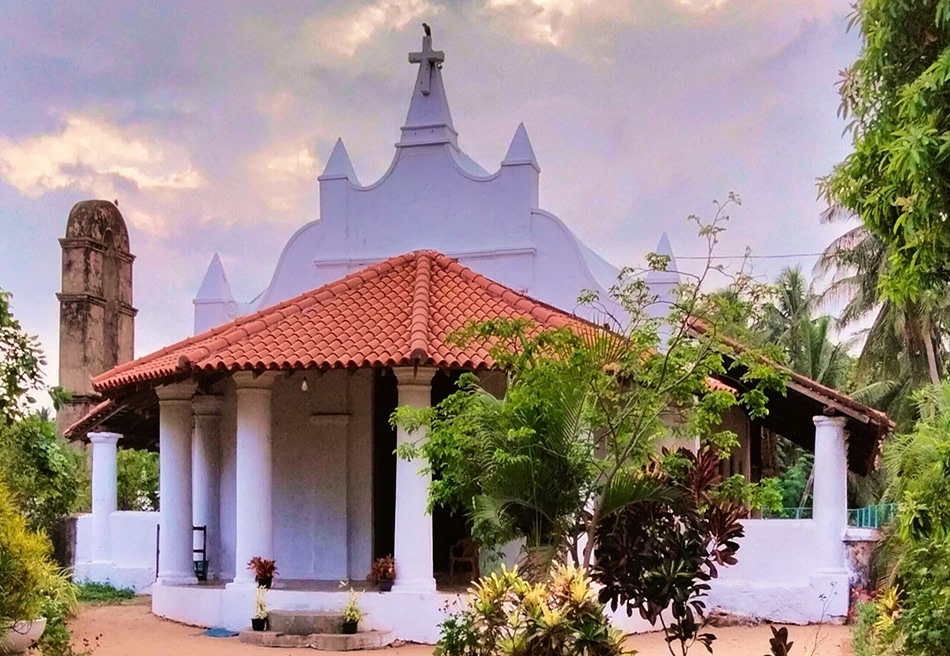
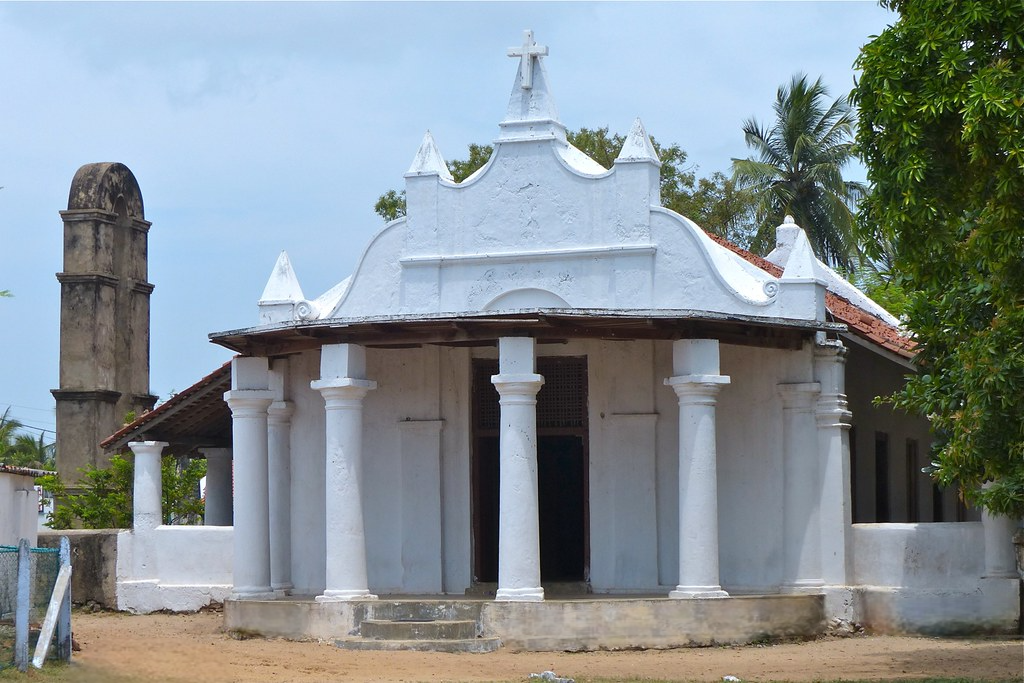
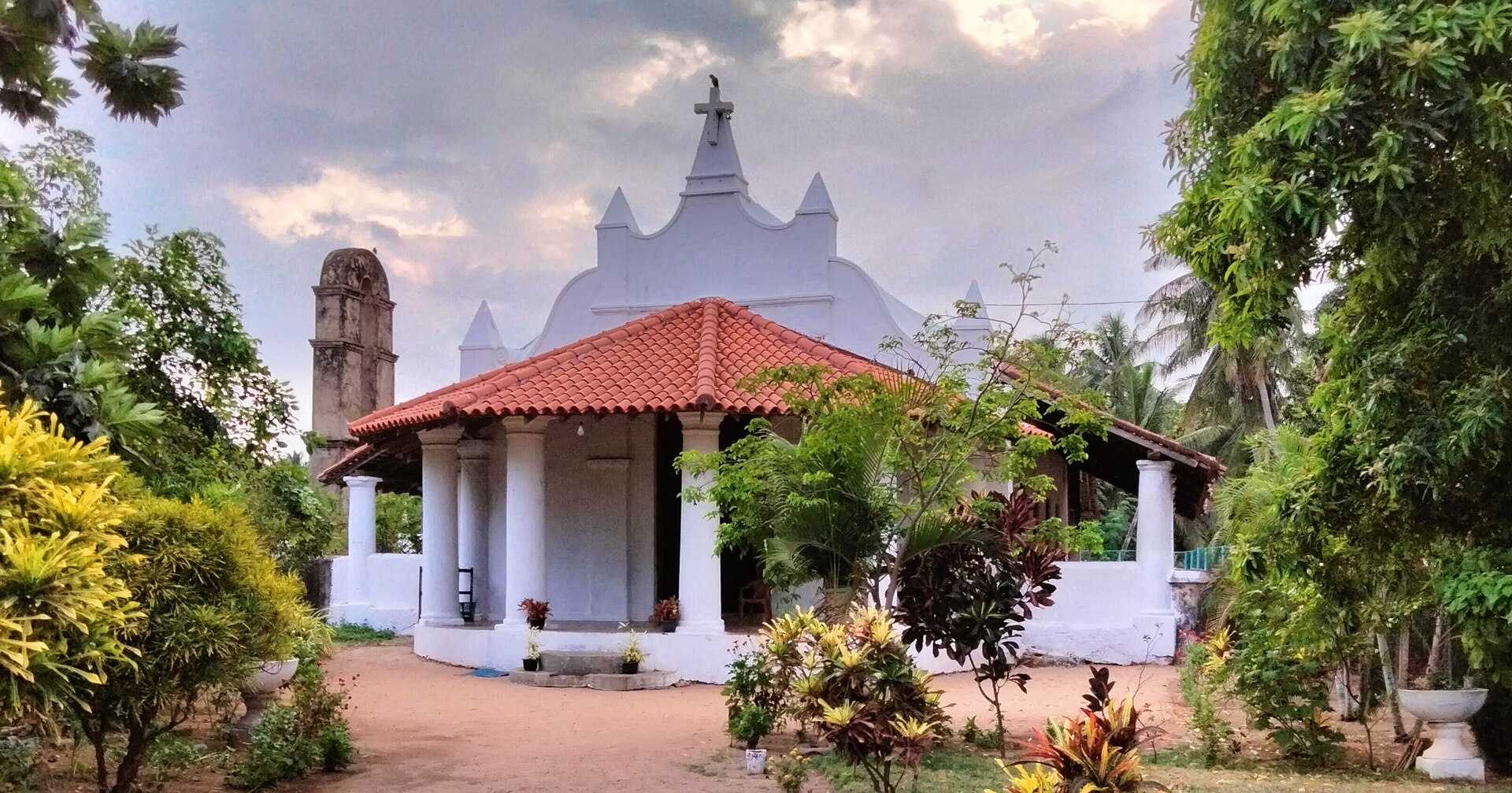
Not far from the fort stands the Christian Reformed Church, built in 1706—a modest structure in the Doric architectural style. Though far simpler than the grand cathedrals of Europe, it carried profound symbolic power. It marked the spread of Reformed Christianity into Sri Lanka and functioned as both a house of worship and a emblem of colonial permanence.
Kalpitiya’s influence did not stop at its church walls. As the Dutch mission grew, Palaviya and Puttalam were established as mission outstations under the Kalpitiya church. These mission houses extended the church’s reach inland, allowing Dutch clergy to evangelize, baptize, and conduct services across a broader region. Puttalam, in particular, became a key center for Christian worship after Dutch rule, and even today holds remnants of that spiritual lineage.
As time passed, the Dutch foothold in Ceylon weakened. By the late 18th century, the British had taken over the island, and Kalpitiya’s fort and church fell into decline. The Dutch congregation dispersed, and the church was later taken over by Anglican missionaries, who used it for worship and made modest enhancements. In the 1840s, a semi-circular porch with plastered brick pillars and Corinthian capitals was added, along with three spires crowning the front gable.
As time passed, the Dutch foothold in Ceylon weakened. By the late 18th century, the British had taken over the island, and Kalpitiya’s fort and church fell into decline. The Dutch congregation dispersed, and the church was later taken over by Anglican missionaries, who used it for worship and made modest enhancements. In the 1840s, they added a semi-circular porch supported by plastered brick pillars with Corinthian capitals, along with three elegant spires on the gable marking a brief revival of the old church’s stature.
But like many colonial relics, the church slipped into disrepair. The roof collapsed, and by the early 20th century, its Dutch bell and original furniture were moved to an Anglican church in nearby Puttalam. What remained were the stone tombs embedded in the floor—some inscribed in Dutch, quietly chronicling the lives and deaths of those who once gathered here in prayer. For decades, the Archaeological Department of Sri Lanka preserved the site as a protected monument. Then, in December 2010, ownership was returned to the Christian Reformed Church, with hopes of restoration and renewed stewardship.
Today, visitors of Kalpitiya can step into this quiet shell of a sanctuary and feel the layers of history wrapped around them. The worn stone walls, the open sky above, and the tombstones beneath your feet speak not just of Dutch settlers or colonial rule, but of the universal stories of faith, identity, and change. The Dutch Reformed Church in Kalpitiya is not merely a ruin—it’s a living narrative in stone. It reminds us how empires rise and fall, how beliefs are built into bricks, and how memory survives long after sermons fade.