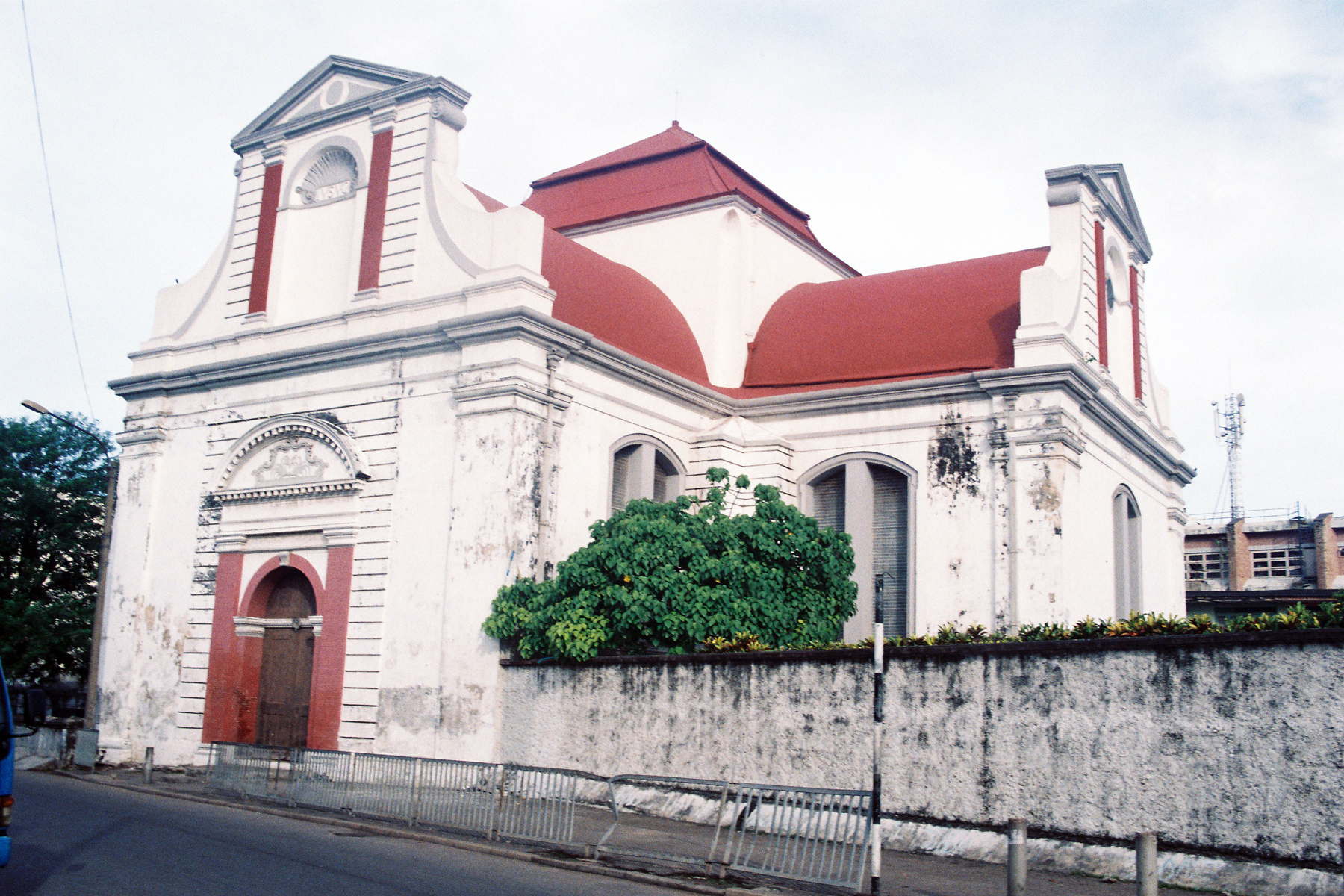
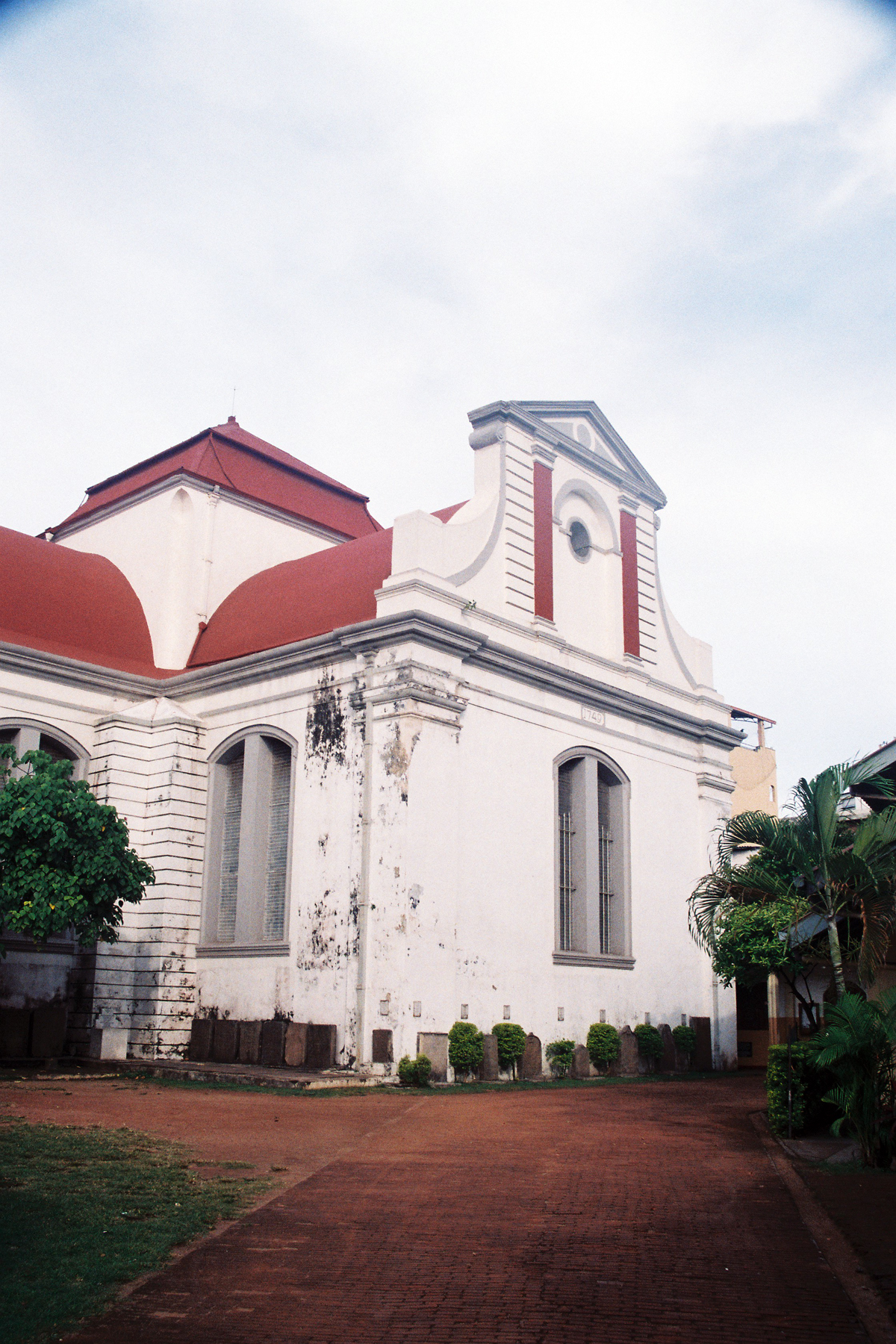
On a hill overlooking Colombo Harbour, amidst the hum of Pettah’s markets and the winding lanes of old Ceylon, rises the Wolvendaal Church—one of the island’s most enduring monuments of faith and history that has stood for over two and a half centuries. Known today as the oldest Protestant church still in use in the island, it has witnessed centuries of worship, war, and change, all while holding steadfast to its faith and heritage and is often called the “Westminster Abbey of Ceylon.”. Its story is not only about stone and lime but also about people, empires, and a faith that has spanned centuries.
The tale begins in the mid-18th century, when the Dutch East India Company was at the height of its power in Ceylon. The Dutch Reformed faith, brought by sailors, soldiers, and settlers, required a place of worship that reflected their permanence. Pettah, then bustling with trade, already housed the Kayman’s Gate church, but it was proving too small for the growing congregation. Thus, in 1749, Governor Julius Valentyn Stein van Gollenesse laid the foundation stone for a new church on a slight rise outside the busy city walls—a site that locals called “Wolvendaal,” or “Dale of Wolves,” recalling the packs of jackals that once roamed the area.
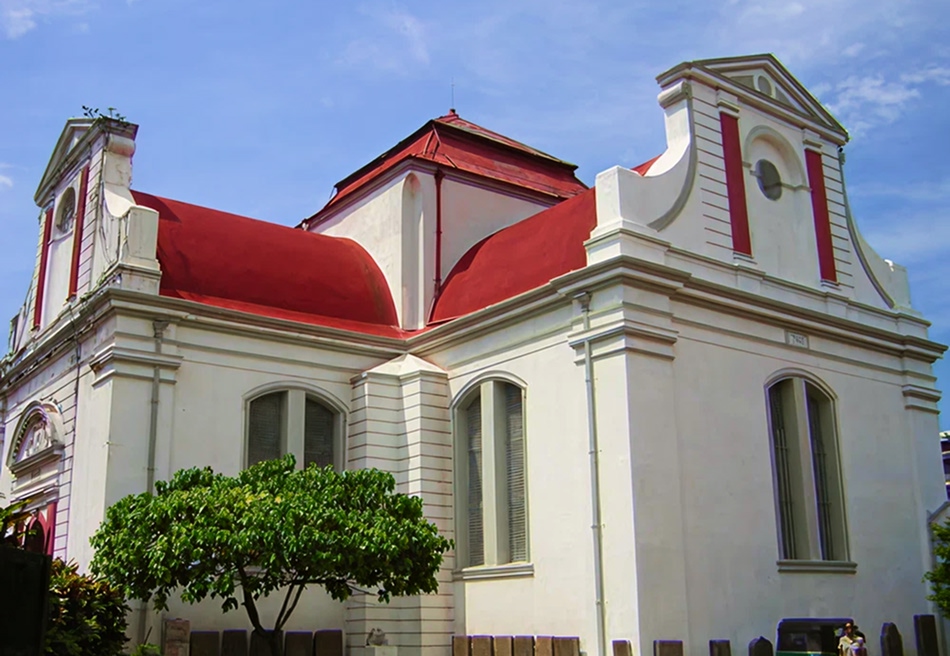
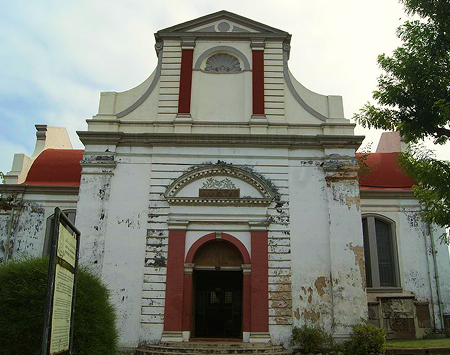
Construction was no small feat. Massive granite stones, coral from the sea, and lime made from burnt seashells were used. Designed in the Doric style, the church rose in the shape of a Greek cross, with five-foot-thick walls and a soaring dome crowned by a gilt weathercock. By 1757, the church was complete, its whitewashed walls gleaming under the Colombo sun. The Wolvendaal Kerk, as it was called, quickly became the heart of Dutch Reformed worship in Ceylon.
The day of its dedication in March 1757 was marked with ceremony. Governor John Gideon Loten, his successor Jan Schreuder, Dutch officials, Burgher families, and clergy gathered as Rev. Mathias Wirmelskircker preached from Genesis 28:22: “And this stone, which I have set up for a pillar, shall be God’s house.” The words proved prophetic, for Wolvendaal has remained God’s house for centuries.
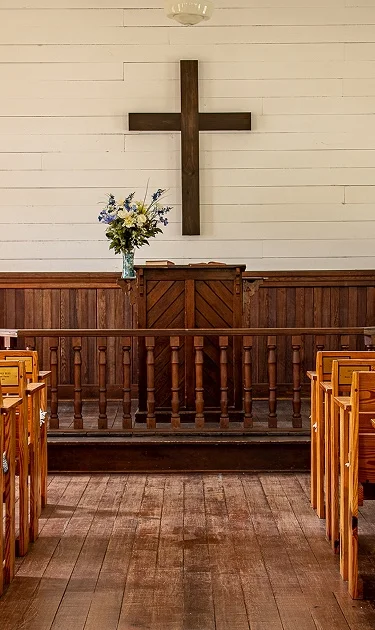
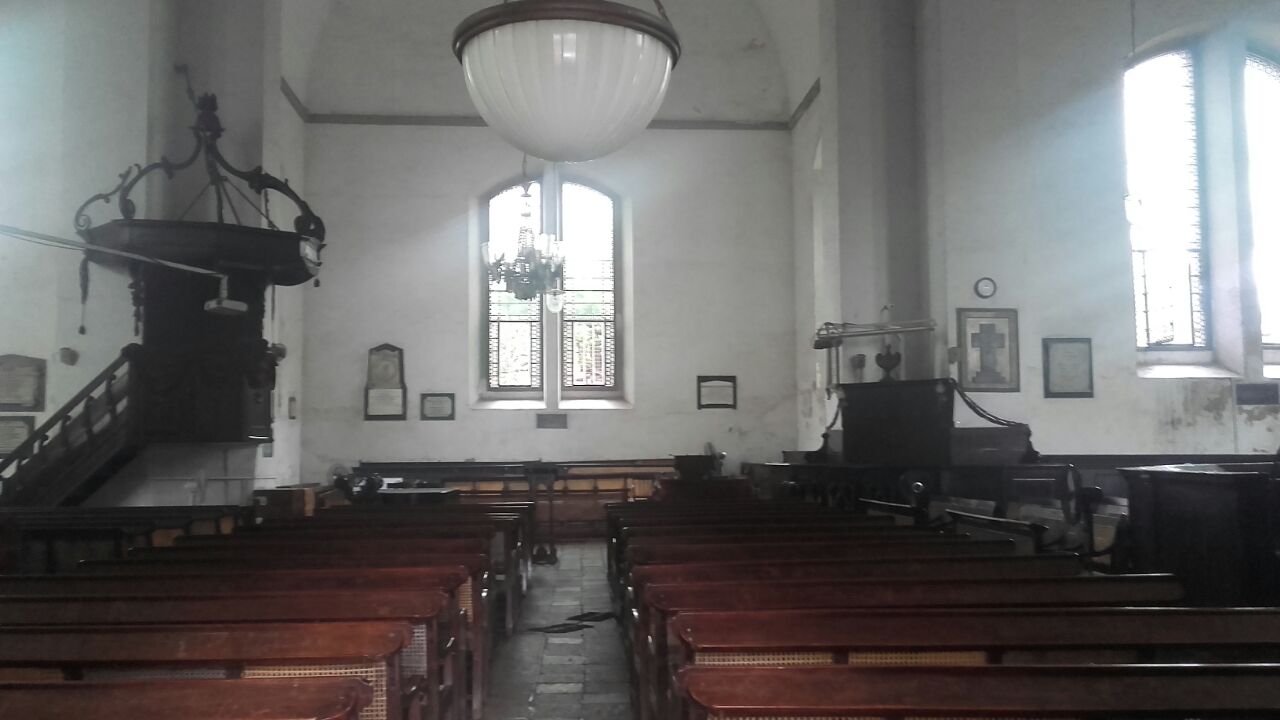
Inside, the church became a treasure house of faith and memory. Ebony and calamander pews were crafted for governors, elders, and the congregation. A remarkable collection of Dutch furniture, including chairs carried each Sunday by families, filled the hall. A finely carved pulpit, chandeliers brought from Holland, and a silver communion set adorned the sanctuary. Later, a baptismal font presented by Governor Rijckloff van Goens commemorated the baptism of his daughter Esther in 1667—an artifact that still speaks of devotion and family love.
Wolvendaal soon became the resting place of Colombo’s colonial elite. Tombstones of Dutch governors, generals, and merchants paved the floor. In 1813, when the old church at Gordon Gardens was demolished, the remains of five Dutch governors were re-interred here in a solemn torchlit procession, complete with cavalry and clergy. Even the last Dutch governor, Jan Gerard van Angelbeek, who died in 1799, was buried here beside his wife.
Through the British era, worship continued. For a time, Anglican clergy shared the pulpit, but the Dutch Reformed congregation maintained its rights under the Treaty of Capitulation of 1796. Services shifted gradually from Dutch to English, mirroring the cultural changes of Ceylon. By the 20th century, milestones such as the ordination of the General Consistory in 1926, the introduction of electricity in 1931, and the bicentenary in 1949 marked its continuity. In 1951, Dutch naval officers presented a memorial tablet in gratitude for the hospitality their soldiers once received. In 1971, the Netherlands government gifted velvet and gold braid to restore the church’s historic furnishings.
Yet time and nature tested the church. Lightning struck the dome in 1856, melting the lead cupola into streams of fire, and gale-force winds in 1969 tore away lead sheets from its roof. Each time, repairs were costly, but the congregation persevered. Donations poured in, even from the Dutch government and Burghers overseas, to preserve what was by then recognized as an irreplaceable treasure.
By the 20th century, Wolvendaal was not only a place of worship but also a symbol of heritage. Visitors marveled at its architecture, while historians pored over the tombstones that recorded an entire epoch. The church became a meeting ground for memory and identity, connecting the Dutch legacy with Sri Lanka’s evolving cultural landscape. The story of Wolvendaal is, at its heart, a story of endurance. Empires have come and gone, languages have shifted, and the city around it has transformed, yet the church remains—a testimony of faith carved in stone, standing steadfast in the heart of Colombo.
Today, more than 260 years after its dedication, Wolvendaal Church stands as a timeless witness to history and faith. Recognized for its cultural and architectural significance, it is now protected as an Archaeological Monument under the Antiquities Ordinance. Its thick walls, ancient pews, chandeliers, and mural tablets speak of centuries gone by. Its white dome rises above the Pettah skyline, a landmark seen from near and far. Inside, the old pulpit still commands attention, and the gravestones continue to tell their silent stories. It remains a place of living worship, drawing the faithful from across the island. In its quiet stillness, beneath its great dome, generations continue to lift their voices to the Eternal God—just as they did in 1757, when the first bell tolled across Colombo’s marshy dale of wolves.